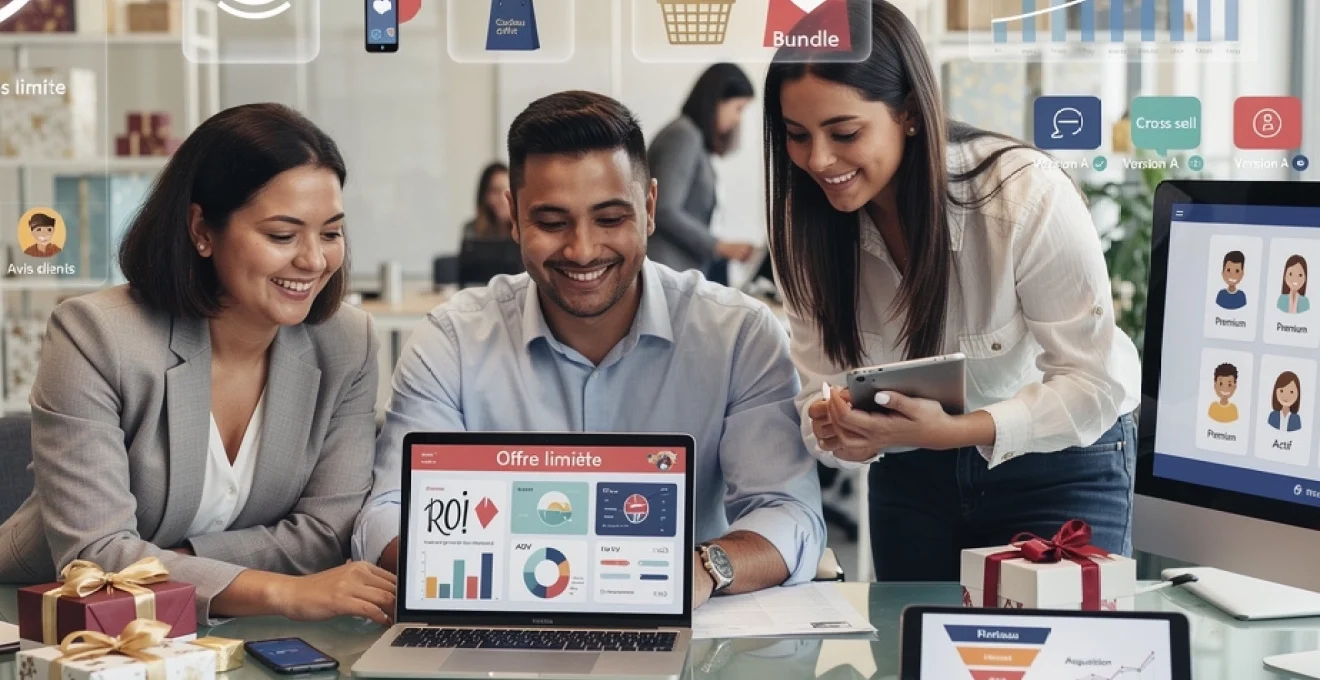
In today’s fiercely competitive marketplace, businesses are discovering that traditional advertising methods alone are insufficient to build lasting customer relationships. Strategic promotional campaigns and thoughtfully designed gift programmes have emerged as powerful tools that go beyond simple transactions, creating emotional connections that transform casual buyers into loyal brand advocates. The integration of promotions and gifts into customer engagement strategies represents a sophisticated approach to building sustainable business growth through enhanced customer lifetime value.
Modern consumers expect more than just quality products or services—they seek meaningful experiences and recognition from the brands they choose to support. Companies that understand this shift are leveraging behavioural economics principles and advanced data analytics to create promotional strategies that resonate on both rational and emotional levels. The result is a more engaged customer base that not only makes repeat purchases but actively promotes the brand through word-of-mouth recommendations and social sharing.
Customer lifecycle value enhancement through strategic promotional campaigns
Strategic promotional campaigns serve as catalysts for maximising customer lifecycle value by creating multiple touchpoints for engagement throughout the entire customer journey. These campaigns work by addressing specific customer needs at different stages, from initial awareness through post-purchase advocacy. The key lies in understanding that each promotional interaction contributes to building a comprehensive relationship rather than focusing solely on immediate sales conversion.
The effectiveness of these campaigns stems from their ability to create cumulative value propositions that compound over time. When customers consistently receive valuable promotions that align with their preferences and purchase patterns, they develop stronger emotional connections to the brand. Research indicates that customers who participate in well-designed promotional campaigns demonstrate 67% higher retention rates compared to those who only engage through standard purchasing channels.
Acquisition cost reduction via Referral-Based gift programmes
Referral-based gift programmes represent one of the most cost-effective customer acquisition strategies available to modern businesses. These programmes leverage the trust inherent in personal relationships, transforming satisfied customers into active acquisition channels. The beauty of referral programmes lies in their dual benefit structure—existing customers receive rewards for their advocacy whilst new customers gain access to valuable incentives for trying the brand.
Successful referral programmes typically achieve customer acquisition costs that are 50-70% lower than traditional advertising channels. This efficiency stems from the pre-qualified nature of referred customers, who often exhibit higher conversion rates and longer tenure with the brand. Companies implementing sophisticated referral tracking systems report that referred customers generate 16% more lifetime value compared to customers acquired through other marketing channels.
Retention rate optimisation using tiered loyalty rewards
Tiered loyalty reward systems create powerful psychological incentives for continued engagement by introducing elements of progression and achievement. These systems work by establishing clear milestones that customers can reach through consistent purchasing behaviour, with each tier offering increasingly valuable rewards and exclusive benefits. The tiered structure taps into customers’ natural desire for status recognition and provides tangible motivation for maintaining brand loyalty.
The implementation of tiered systems has shown remarkable results across various industries, with businesses reporting retention rate improvements of 25-40% within the first year of implementation. The key success factor lies in designing tier thresholds that are achievable yet meaningful, ensuring customers feel motivated to progress whilst maintaining engagement throughout their journey. Progressive reward structures create anticipation and encourage customers to consolidate their spending with a single brand rather than dispersing it across multiple competitors.
Average order value amplification through bundle promotions
Bundle promotions serve as sophisticated tools for increasing average order value whilst providing customers with enhanced perceived value. These promotions work by combining complementary products or services at attractive price points, encouraging customers to purchase more than they initially intended. The psychological appeal of bundles lies in their ability to simplify decision-making whilst offering apparent savings compared to individual purchases.
Strategic bundle design requires deep understanding of customer purchasing patterns and product relationships. Companies that excel in bundle promotions analyse transaction data to identify natural product combinations and create offers that feel intuitive rather than forced. Well-executed bundle campaigns typically increase average order value by 30-50% whilst maintaining healthy profit margins through intelligent product mix optimisation.
Cross-selling efficiency metrics in Gift-With-Purchase campaigns
Gift-with-purchase campaigns represent sophisticated cross-selling mechanisms that introduce customers to new products whilst rewarding their loyalty. These campaigns
typically perform best when the gift is both useful and discoverable—for example, a travel-size version of a premium product or access to a new feature tier for a limited time. By tracking attachment rates, subsequent purchase behaviour, and category migration, brands can quantify how many customers go on to buy the gifted product at full price. Mature programmes often see cross-sell uplift of 10–25%, particularly when gifts are closely aligned with the customer’s existing preferences rather than generic freebies.
To maximise cross-selling efficiency, businesses should establish clear metrics before launch. These might include secondary product adoption, repeat purchase rates of the gifted item, and incremental revenue per participant compared to a control group. When combined with post-promotion surveys and cohort analysis, these metrics reveal which gift types, price points, and trigger thresholds drive genuine engagement rather than one-off opportunistic purchases. Over time, this data-driven approach transforms gift-with-purchase campaigns from tactical giveaways into strategic levers for expanding product penetration and deepening customer relationships.
Psychological triggers and behavioural economics in customer engagement
Behind every successful promotion or gift strategy lies a set of psychological triggers that influence how customers perceive value and make decisions. Behavioural economics provides a powerful lens for designing campaigns that align with how people actually behave, not just how they say they will. By intentionally embedding principles such as reciprocity, loss aversion, social proof, and the endowment effect, brands can craft promotional experiences that feel natural, rewarding, and memorable.
These behavioural triggers help transform otherwise transactional interactions into emotionally resonant moments. Rather than relying solely on discounting, engagement-focused marketers build promotion frameworks that appeal to intrinsic motivations: the desire to belong, to feel appreciated, and to avoid missing out. When you combine these psychological levers with robust customer data, you create a promotional engine that systematically nudges customers towards deeper loyalty and advocacy.
Reciprocity principle application in corporate gifting strategies
The reciprocity principle suggests that when people receive something of value, they feel a natural inclination to return the favour. In a corporate gifting context, this does not mean “buying” loyalty; instead, it means creating genuine moments of appreciation that open the door to stronger relationships. A well-timed, thoughtfully chosen gift—such as a digital reward after a key milestone or a personalised welcome package—signals that you value the customer beyond their last invoice.
To apply reciprocity effectively, the perceived sincerity of the gesture matters as much as the monetary value. Customers respond better to gifts that are personalised, context-aware, and clearly not contingent on immediate action. For example, sending an unannounced eGift card to celebrate the first anniversary of a subscription often generates higher engagement than a transactional “spend more to get more” offer. Brands that operationalise this principle within their engagement strategy frequently see improved response rates to subsequent campaigns and higher participation in feedback, referrals, and upsell conversations.
Loss aversion tactics through limited-time promotional offers
Loss aversion—the idea that people are more motivated to avoid losses than to pursue equivalent gains—is one of the most powerful behavioural levers in promotion design. Limited-time offers, expiring rewards, and countdown campaigns tap into this bias by framing inaction as a potential loss. When a customer sees that their bonus points, exclusive discount, or gift-with-purchase opportunity will disappear soon, they are far more likely to act than if the same benefit were available indefinitely.
However, overusing urgency can backfire and erode trust. The key is to deploy loss aversion tactically, with clear rules and honest timeframes. For instance, offering a 48-hour “thank you” upgrade after a major purchase, or a limited-time bonus gift for completing an onboarding step, can drive immediate engagement without feeling manipulative. When combined with transparent communication and visible countdowns, these tactics increase conversion rates and help customers prioritise your offer amid competing demands on their attention.
Social proof mechanisms in user-generated content campaigns
Social proof leverages the human tendency to look to others when deciding how to behave, especially in uncertain situations. In customer engagement, this translates into showcasing real experiences—reviews, testimonials, unboxing photos, and case studies—that demonstrate how others are benefiting from your promotions and gifts. When prospects see their peers participating in a referral programme or sharing their reward experiences, they are more likely to join in.
User-generated content (UGC) campaigns that tie participation to small rewards can turbocharge this effect. For example, offering an entry into a prize draw or a modest digital gift card for posting a photo of a received gift (within clear compliance guidelines) creates a virtuous cycle: more participation leads to more content, which in turn creates more trust and engagement. Embedding this content into your product pages, email flows, and social channels provides ongoing validation that your promotional initiatives are both popular and genuinely valued.
Endowment effect leveraging through personalised gift experiences
The endowment effect describes how people tend to value items more highly once they feel a sense of ownership over them. Personalised gifts and previews of benefits leverage this by helping customers mentally “claim” a reward before they have fully earned or redeemed it. Think of it as handing someone the keys to a car for a test drive—once they picture it as theirs, it becomes harder to give up.
In practice, this might mean pre-allocating a reward balance inside a loyalty wallet, displaying a “reserved for you” gift in an account dashboard, or allowing customers to choose their preferred gift option before they complete the qualifying action. By making the reward feel like it already belongs to them, you reduce psychological friction and increase follow-through rates. Personalisation further amplifies the effect: when the gift reflects known preferences—such as favourite categories, causes, or retailers—customers perceive it as uniquely theirs, strengthening emotional attachment to your brand.
Data-driven promotional segmentation and personalisation frameworks
As promotions and gifting mature from ad-hoc tactics to core pillars of customer engagement, data becomes the foundation for every decision. Rather than sending the same offer to every customer, high-performing brands use segmentation and personalisation frameworks to ensure that the right incentive reaches the right person at the right time. This not only improves campaign performance but also protects margins and reduces promotion fatigue.
Modern engagement strategies blend classical analytical methods with machine learning to understand customer value, predict behaviour, and orchestrate omnichannel journeys. When you align data-driven insights with behavioural principles, your promotions stop feeling like generic blasts and instead become tailored experiences that anticipate customer needs. The result is higher redemption rates, improved satisfaction scores, and a measurable lift in customer lifetime value.
RFM analysis implementation for gift targeting algorithms
RFM analysis—standing for Recency, Frequency, and Monetary value—remains one of the most practical frameworks for segmenting customers for promotions and gifts. By scoring each customer on how recently they purchased, how often they buy, and how much they spend, you can quickly identify high-value advocates, at-risk segments, and new customers with strong potential. This structured view allows you to allocate gifting budgets where they will have the highest impact on engagement and revenue.
For example, “champion” customers (high R, F, and M scores) might receive surprise-and-delight gifts or exclusive early access offers, reinforcing their loyalty. At-risk but historically valuable customers could be targeted with reactivation incentives or personalised bundles based on past purchases. Meanwhile, new but high-spend buyers may be fast-tracked into higher loyalty tiers with welcome gifts that encourage further exploration. Implementing RFM-based gift targeting algorithms within your CRM or promotion engine ensures that every gesture has a clear strategic purpose rather than being distributed randomly.
Predictive analytics using machine learning for promotion timing
Determining when to present a promotion or gift can be just as important as deciding what to offer. Machine learning models analyse historical data—such as browsing patterns, cart events, seasonality, and response history—to predict when a customer is most likely to convert, churn, or engage. By surfacing incentives at the right moment, you reduce wasted impressions and dramatically increase the effectiveness of your campaigns.
Practical applications include predicting the optimal time to send a “win-back” gift to lapsed customers, triggering a checkout incentive when a high-intent shopper shows signs of hesitation, or scheduling loyalty bonus campaigns just before typical drop-off points in a subscription cycle. Think of these models as a weather forecast for customer behaviour: they do not guarantee an outcome, but they significantly improve your odds of engaging customers when they are most receptive. Over time, feedback loops from campaign performance further refine these predictions, creating a self-optimising promotion timing engine.
Customer journey mapping through omnichannel gift touchpoints
Customer journey mapping allows you to visualise every interaction a person has with your brand, from initial awareness to advocacy. When you overlay gift and promotion touchpoints onto this journey, you can identify strategic moments where an incentive will feel natural and supportive rather than intrusive. This perspective prevents you from clustering too many offers in a single phase while neglecting critical transition points like onboarding, product activation, or renewal.
In an omnichannel environment, a single journey might span email, mobile app, in-store visits, social media, and customer support interactions. For example, a digital scratch card sent after a support interaction can turn a potentially negative experience into a positive surprise, while an in-app spin-to-win game during peak shopping periods can drive incremental purchases. By designing journeys that connect these touchpoints coherently, you create a consistent narrative: customers understand why they are receiving a particular gift or promotion at a specific time, which enhances trust and perceived relevance.
A/B testing methodologies for promotional message optimisation
Even the most sophisticated segmentation and timing strategies can fall flat if the messaging does not resonate. A/B testing provides a disciplined way to refine subject lines, call-to-action phrasing, creative assets, and reward framing. Rather than relying on intuition alone, you can test variations with statistically significant samples and use the results to continuously improve engagement-focused promotions.
Effective testing goes beyond cosmetic tweaks. You might compare the performance of “earned” incentives versus upfront discounts, experiment with different ways of framing scarcity (“only 24 hours left” versus “offer ends Friday”), or test whether emphasising emotional benefits (feeling appreciated) outweighs purely financial savings. By documenting insights and feeding them back into your promotion playbooks, you build an institutional knowledge base that compounds over time—much like financial interest—for every future campaign.
Multi-channel distribution strategies for gift and promotion delivery
Customers today move fluidly between digital and physical environments, so your gift and promotion strategy needs to follow them wherever they choose to engage. Relying on a single channel, such as email, risks missing large segments of your audience or creating bottlenecks during key campaigns. Multi-channel distribution ensures that high-value incentives reach customers via the mediums they trust and use most—email, SMS, mobile apps, social platforms, direct mail, and in-store experiences.
An effective multi-channel approach does not mean blasting the same message everywhere. Instead, it orchestrates complementary touchpoints. For instance, a loyalty bonus might be announced via email, reminded via push notification, and reinforced in-store through POS messaging and staff prompts. Physical gifts can be paired with digital follow-ups that invite feedback or encourage social sharing. By coordinating channels and maintaining consistent messaging, you create a seamless engagement journey where each touchpoint reinforces the last, rather than competing for attention.
ROI measurement and KPI tracking for engagement-focused campaigns
To justify investment in promotions and gifting, you need a clear framework for measuring return on investment (ROI) and tracking key performance indicators (KPIs). Engagement-focused campaigns are not only about short-term sales uplift; they also influence retention, advocacy, and long-term customer lifetime value. This means your reporting should connect campaign costs and outcomes across multiple stages of the customer lifecycle.
Core metrics typically include redemption rate, conversion rate, incremental revenue, and cost per acquisition or reactivation. More advanced teams also track downstream indicators such as changes in purchase frequency, average order value, and net promoter score (NPS) among campaign participants. By comparing these metrics against control groups who did not receive the promotion or gift, you can isolate true incremental impact rather than attributing natural behaviour to your campaign. Over time, this data informs smarter budget allocation, helping you double down on the incentives and audiences that consistently deliver positive ROI.
Technology integration and automation in modern promotional systems
As promotional strategies grow more sophisticated, manual execution quickly becomes unsustainable. Technology platforms that integrate with your CRM, eCommerce, POS, and marketing automation tools are essential for orchestrating real-time, personalised incentives at scale. These systems act as the “brain” of your engagement strategy, ingesting behavioural and transactional data, applying segmentation logic, and triggering the right promotion or gift based on defined rules or predictive models.
Automation reduces operational friction and ensures consistent execution. For example, you can automatically issue a digital reward when a customer completes a demo, upgrade loyalty tiers based on real-time spend, or send a reactivation gift after a set period of inactivity. APIs and webhooks enable these actions to happen instantly across channels, while centralised dashboards provide visibility into performance and compliance. When technology is implemented thoughtfully, it doesn’t replace the human element of gifting—it amplifies it, allowing your team to focus on strategy and creativity while the systems handle delivery, tracking, and optimisation.