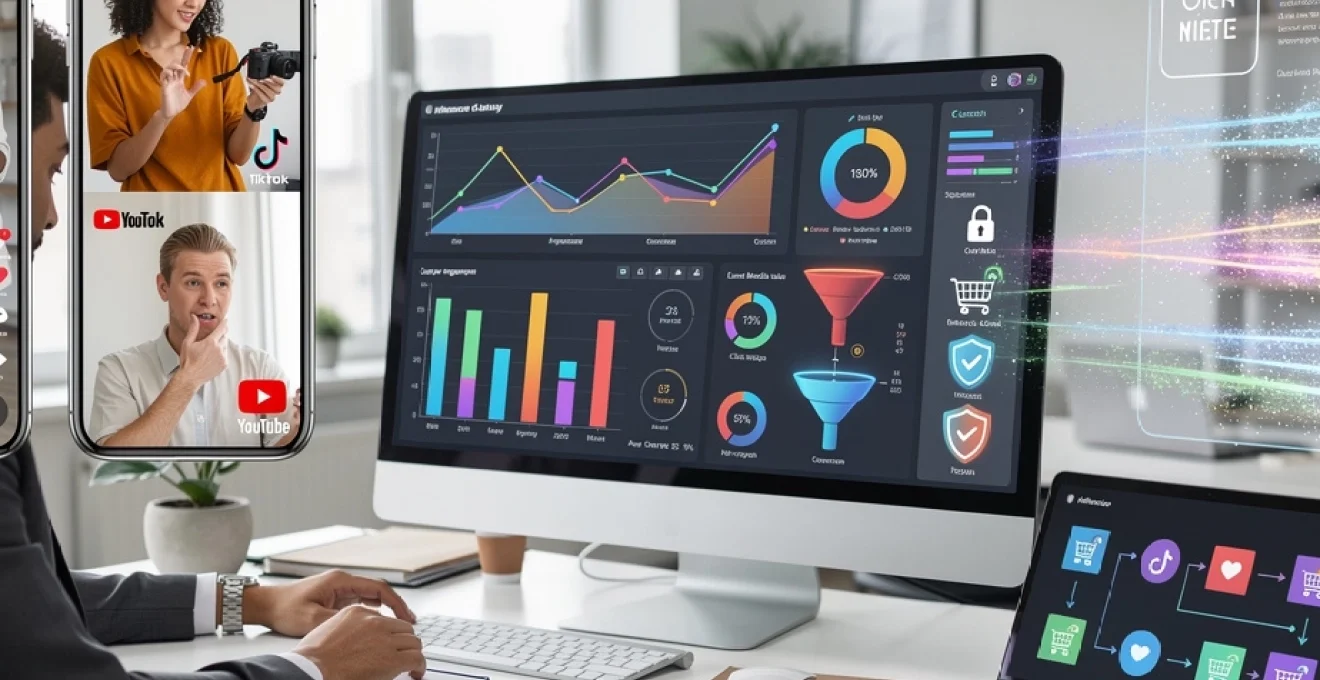
Influencer marketing has evolved from a novel tactic into a mainstream marketing channel that delivers measurable results across industries. Brands allocating resources to influencer partnerships report average returns of £5.78 for every pound spent, according to recent industry benchmarks. However, these impressive figures mask a harsh reality: poorly planned influencer campaigns can drain budgets faster than almost any other marketing channel. The difference between campaigns that deliver exceptional ROI and those that squander resources lies not in budget size, but in strategic execution and rigorous performance management.
The landscape has shifted dramatically from the early days when brands simply paid celebrities for promotional posts. Today’s sophisticated marketers understand that follower counts mean little without genuine engagement, that micro-influencers often outperform macro-influencers, and that content repurposing can multiply campaign value exponentially. As platforms introduce new features and audiences grow increasingly discerning about sponsored content, the margin for error continues to shrink. Brands must approach influencer marketing with the same analytical rigour they apply to paid search or programmatic display advertising.
Influencer marketing ROI metrics and performance tracking frameworks
Measuring influencer marketing effectiveness requires moving beyond vanity metrics like impressions and follower counts. The most successful campaigns establish clear performance frameworks before a single pound changes hands. These frameworks connect influencer activity directly to business outcomes, whether that means website traffic, email signups, product trials, or actual purchases. Without this measurement infrastructure, brands operate blind, unable to distinguish high-performing partnerships from budget-draining duds.
The challenge lies in attribution complexity. Unlike paid search where conversion tracking is straightforward, influencer marketing operates across multiple touchpoints and platforms. A customer might discover your brand through an influencer’s Instagram Story, research it via a YouTube review from a different creator, then convert three weeks later after seeing a third influencer’s post. Building attribution models that capture this journey requires technical sophistication and cross-platform data integration that many marketing teams struggle to implement effectively.
Cost per engagement (CPE) calculation and industry benchmarks
Cost per engagement remains one of the most telling indicators of campaign efficiency. Calculate CPE by dividing total campaign investment (including product costs, payment, and management time) by total meaningful engagements (likes, comments, shares, saves, and clicks). Industry benchmarks vary dramatically by sector and platform, but Instagram CPE typically ranges from £0.08 to £0.25, whilst TikTok often delivers lower CPE of £0.05 to £0.18 due to its superior organic reach algorithms.
However, not all engagements carry equal weight. A save or share indicates stronger purchase intent than a like, whilst a comment suggests deeper connection than a passive view. Sophisticated marketers weight these actions differently when calculating effective CPE. For instance, you might count a save as equivalent to three likes, or a share as worth five likes. This weighted CPE provides more accurate insight into campaign value than raw engagement counts ever could.
Earned media value (EMV) assessment using AspireIQ and traackr
Earned Media Value attempts to quantify the equivalent advertising spend required to generate the same reach and engagement through paid channels. Platforms like AspireIQ and Traackr automate EMV calculations by comparing influencer post performance against typical paid social benchmarks for your industry. An influencer post generating 50,000 impressions and 2,500 engagements might carry an EMV of £3,000 to £5,000, depending on your sector’s paid media costs.
Critics rightly point out that EMV calculations involve assumptions that don’t always hold in practice. The methodology assumes influencer content performs identically to branded ads, which overlooks the trust premium that authentic creator content commands. Despite these limitations, EMV provides a useful framework for comparing influencer investments against alternative marketing channels. When an influencer partnership delivers £8,000 in EMV for a £1,200 investment, the value proposition becomes clear even if the exact figures involve estimation.
Attribution modelling for Influencer-Driven conversions
Attribution modelling for influencer campaigns requires unique identifiers that connect creator content to conversion events. The most reliable approach combines platform-specific solutions with cross-channel tracking infrastructure. Instagram and TikTok’s native
shopping features with classic web analytics. Use unique UTM parameters on every influencer link, creator-specific discount codes for offline tracking, and dedicated landing pages that mirror the influencer’s message. When a user clicks from an Instagram Story with a swipe-up link, for example, that session should be tagged right through to purchase so you can attribute revenue accurately.
From there, you can decide which attribution model best reflects your buying journey. A simple last-click model will credit the final touchpoint before conversion, but this often underestimates the value of top-of-funnel creators. Multi-touch models, such as time-decay or position-based attribution, give partial credit to each influencer interaction along the path to purchase. Even if you only have basic tools, comparing “influencer-assisted conversions” against a control period without influencer activity helps you understand whether influencer marketing is driving incremental results or simply eating credit from other channels.
Customer acquisition cost (CAC) analysis in influencer campaigns
Customer Acquisition Cost (CAC) is the north star metric for budget-conscious influencer marketing. To calculate CAC for an influencer campaign, divide your total influencer spend for a given period (fees, product costs, shipping, agency or platform fees, and internal labour estimates) by the number of new customers acquired that can be attributed to influencer activity. If you invested £10,000 and acquired 400 new customers, your influencer CAC is £25.
The real power comes when you compare influencer CAC to other channels and to your average customer lifetime value (LTV). If your influencer CAC is 30% lower than paid social CAC and your average LTV is £150, you have a strong argument to scale that influencer program. On the other hand, if CAC creeps above your LTV, you are effectively paying more to acquire customers than they generate in revenue. In that scenario, you should tighten your influencer vetting, renegotiate fees, push harder on performance-based compensation, or shift budget towards creators and formats that are already proving profitable.
Micro-influencer vetting protocols and platform selection
Vetting micro-influencers properly is where you stop wasting influencer budget before a single post goes live. With thousands of potential creators across Instagram, TikTok, and YouTube, the temptation is to prioritise speed over scrutiny. Yet a single collaboration with an influencer who has fake followers, misaligned values, or poor audience fit can burn through your limited budget without delivering results. A robust vetting protocol acts as your quality control checklist, ensuring you only invest in creators who can genuinely move the needle.
Rather than chasing every platform at once, align your influencer platform selection with your customers’ behaviour and your content strengths. If you sell visually driven DTC products with a young audience, TikTok and Instagram Reels may lead the way. If your offer is more complex or high-ticket, long-form YouTube reviews and YouTube Shorts often provide the educational depth required for conversions. Start with one or two primary platforms where you can execute well, then expand once you have proof of concept and reliable performance data.
Audience authenticity audits through HypeAuditor and social blade
Audience authenticity is the first test any potential micro-influencer should pass. Tools like HypeAuditor and Social Blade allow you to conduct audience quality checks in minutes, surfacing suspicious follower patterns and engagement anomalies. Look for steady, organic follower growth over time rather than sudden spikes that might indicate purchased followers. A growth chart that looks like a smooth hill is healthier than one that looks like a cliff.
Dig into the audience quality scores these tools provide, focusing on indicators such as estimated percentage of real followers, comment authenticity, and engagement distribution. If you see a high proportion of followers located in countries that are irrelevant to your market, or comment sections filled with generic, copy-paste phrases, treat that as a red flag. You do not need perfection, but you do need confidence that a meaningful percentage of followers are real people who could realistically buy from you.
Engagement rate thresholds across instagram, TikTok, and YouTube
Engagement rate remains the quickest proxy for audience responsiveness, especially with micro-influencers. On Instagram, a healthy engagement rate for micro-influencers typically sits between 3% and 6%, while TikTok micro-creators can often exceed 8% given the platform’s discovery mechanics. YouTube operates differently due to its algorithm and content formats, but for micro- and mid-tier channels, a 3% to 5% engagement rate on sponsored videos is a strong benchmark.
When evaluating engagement, look at both averages and consistency. Does the influencer maintain similar engagement on organic and sponsored posts, or does interaction collapse when content is paid? A creator whose audience tunes out brand collaborations will deliver poor influencer campaign ROI, no matter how cheap the post is. Consider setting minimum thresholds by platform and niche, and deprioritise any profiles that fall below those benchmarks over their last 20–30 posts.
Demographic alignment analysis using affinity mapping
Even the most engaged audience is useless if it does not match your target customer. Demographic alignment ensures your influencer marketing spend reaches the right people, not just more people. Affinity mapping tools within platforms like Traackr, AspireIQ, and many social listening suites enable you to see who follows your chosen influencers, including age, gender, location, language, and interests. Compare this with your buyer personas—is there at least a 60–70% overlap on the attributes that matter most for your business?
You can take this a step further by analysing interest affinity. Which brands, media outlets, and hashtags does the influencer’s audience also follow? This is like seeing which magazines they read and which shops they browse on the weekend. If you sell premium fitness supplements, for example, you want followers who also engage with performance training creators, sportswear brands, and nutrition content. This affinity mapping not only validates influencer selection but can inspire fresh campaign angles that resonate more deeply with those micro-communities.
Content quality assessment and brand safety verification
High engagement and demographic fit still do not guarantee that an influencer is safe for your brand. Content quality and brand safety checks protect you from reputational damage that could easily outweigh any campaign returns. Review at least the last six months of their content, paying close attention to tone, language, and how they discuss other brands. Do they disclose sponsorships transparently? Do they respond respectfully to criticism? These signals indicate how they are likely to represent you when things go live.
It is also worth doing basic due diligence beyond the main feed. Search their handle on Google and Twitter (X) to check for past controversies or problematic statements. Many brands now maintain a simple risk scoring system—rating potential partners across categories such as profanity, polarising political stances, or unsafe product endorsements. By codifying this process, you avoid subjective judgement and ensure that all influencer partnerships meet a consistent brand safety standard.
Contract negotiation strategies and performance-based compensation models
Once you have identified the right creators, the next challenge is agreeing terms that protect your budget while still motivating influencers to deliver. Strong influencer contracts are not just legal formalities; they are practical tools for setting expectations, clarifying deliverables, and aligning incentives with performance. When you move beyond flat fees into performance-based influencer compensation models, you shift more risk away from your brand and create upside for creators who genuinely help you grow.
However, performance-driven deals do not mean underpaying influencers or expecting free work. The most sustainable partnerships balance a reasonable base guarantee with clear opportunities to earn more based on measurable results. Think of it like a sales commission structure: a solid base ensures commitment, while bonuses reward outstanding outcomes. This approach attracts professional creators who take your campaign seriously and are willing to collaborate on optimisation rather than treating your brief as a one-off transaction.
Tiered payment structures linked to deliverable milestones
Tiered payment structures allow you to de-risk campaigns by tying payments to specific milestones. Instead of paying 100% up front, you might structure deals as 30% on contract signature, 40% upon content delivery and approval, and 30% after content goes live and meets minimum performance standards (such as on-time posting and compliance with your brief). This staggered approach keeps both sides accountable throughout the process.
You can further refine this by linking parts of the fee to agreed deliverables beyond the core post, such as raw footage for repurposing, behind-the-scenes content, or an additional Story frame if the initial post performs well. When creators know that certain payments are contingent on hitting these milestones, they are far more likely to communicate proactively, stick to timelines, and collaborate on tweaks that benefit campaign performance.
Usage rights and content licensing terms for whitelisting
One of the most cost-effective ways to stretch your influencer budget is to negotiate usage rights that allow you to repurpose content across paid and owned channels. In the contract, be explicit about where, how, and for how long you can use influencer-generated content. Do you have rights for six months of paid amplification via Meta Ads Manager? Can you feature the content on your website, email campaigns, and product pages? Clarity upfront prevents disputes later and avoids surprise licensing fees.
Whitelisting, where brands run paid ads from the creator’s handle, can significantly reduce cost per acquisition by combining influencer trust with performance targeting. Because whitelisting changes how content appears and is distributed, you need explicit permission in the contract to access creator ad accounts or collaborate through platform-specific tools such as Facebook’s Brand Collabs Manager. While expanded usage rights often merit a higher fee, the incremental cost is usually small compared with commissioning a separate shoot or building new creative from scratch.
Exclusivity clauses and competitor restriction frameworks
Exclusivity clauses protect your investment by preventing influencers from promoting direct competitors during a specified window. Without them, you risk your sponsored post being undermined a week later when the same creator appears in a rival’s campaign. That said, overly broad or lengthy exclusivity terms can make deals prohibitively expensive, especially with in-demand micro- and mid-tier creators. The solution is to be precise.
Define exclusivity by category, geography, and timeframe. For example, instead of banning “all fashion brands,” specify “premium sustainable activewear brands in the UK and EU for 30 days post-publication.” This specificity reassures creators that you are not trying to lock down their entire income stream while still protecting your core competitive space. You can also offer tiered fees for different levels of exclusivity, allowing creators to choose the option that best fits their pipeline of partnerships.
Performance bonuses tied to click-through rates and conversion metrics
Performance bonuses are where influencer marketing truly starts to look like performance marketing. Rather than paying only for deliverables, you reward creators for the outcomes that matter to your business—click-throughs, signups, or sales. For example, you might offer a £200 base fee for a post plus £1–£2 per incremental sale generated through their unique discount code, or a bonus if their content exceeds a certain click-through rate benchmark compared with your account average.
This shared-risk, shared-reward model is particularly powerful for influencers who already believe in your product and have a track record of driving action. It also gives you a natural mechanism for scaling successful partnerships: if a creator’s content generates a strong return, you can simply increase their commission or allocate more paid amplification budget behind their posts. Over time, your influencer portfolio becomes self-optimising, as you invest more in the partners whose performance justifies higher spend.
Content brief development and creative direction parameters
A clear, well-structured content brief is one of the simplest ways to protect your influencer marketing budget. Without it, you risk paying for content that misses key messages, violates advertising standards, or simply does not feel on-brand. At the same time, overly prescriptive briefs can crush the creativity that makes influencer content effective in the first place. The goal is to provide strategic guardrails, not a shot-by-shot storyboard.
Start by defining the campaign objective in plain language: are you driving awareness, generating leads, or pushing a specific product offer? Then outline your must-have elements—core messages, product features, hashtags, legal disclaimers, and disclosure requirements. From there, give creators room to adapt the story to their own voice and format. You might specify that a TikTok creator needs to show the product in use within the first three seconds, for example, but let them decide on the hook, audio, and humour style that best suits their audience.
Campaign amplification through meta ads manager and spark ads
Even the best influencer content will have a limited organic shelf life if you do not amplify it strategically. Paid amplification is where you turn a few strong posts into a sustained campaign, extending reach to lookalike audiences and retargeting users who engaged but did not convert. Meta Ads Manager allows you to turn Instagram and Facebook influencer posts into high-performing ads, either by boosting them directly or running them as part of structured campaigns with proper audience segmentation and A/B testing.
On TikTok, Spark Ads let you promote existing organic posts from a creator’s account, preserving all social proof—likes, comments, and shares—while unlocking advanced targeting and optimisation. This combination of native creator credibility and paid distribution often delivers lower cost per click and cost per acquisition than brand-led ads. The key is to be selective: only amplify the top-performing 10–20% of influencer content, based on early engagement and click metrics, rather than spreading budget thinly across every asset.
Post-campaign analysis and budget reallocation optimisation
Once a campaign concludes, systematic analysis is what turns one-off wins into a scalable influencer strategy. Instead of glancing at a few vanity metrics and moving on, consolidate all relevant data: impressions, reach, engagement, clicks, conversions, CAC, and any offline uplift you can reasonably connect to influencer activity. Compare these figures against your original objectives and benchmarks from other marketing channels. Did influencer marketing deliver a lower cost per acquisition, higher average order value, or faster payback period than your paid social or search campaigns?
From here, categorise creators into tiers based on performance: high performers worth rebooking and scaling, steady contributors to maintain, and underperformers to pause or remove from your roster. Reallocate future influencer budget towards the formats, platforms, and partners that delivered the strongest ROI, and experiment cautiously with new creator segments using a test-and-learn mindset. By treating each influencer campaign as a data point in a continuous optimisation cycle, you ensure that every pound you invest in influencer marketing works harder than the last.