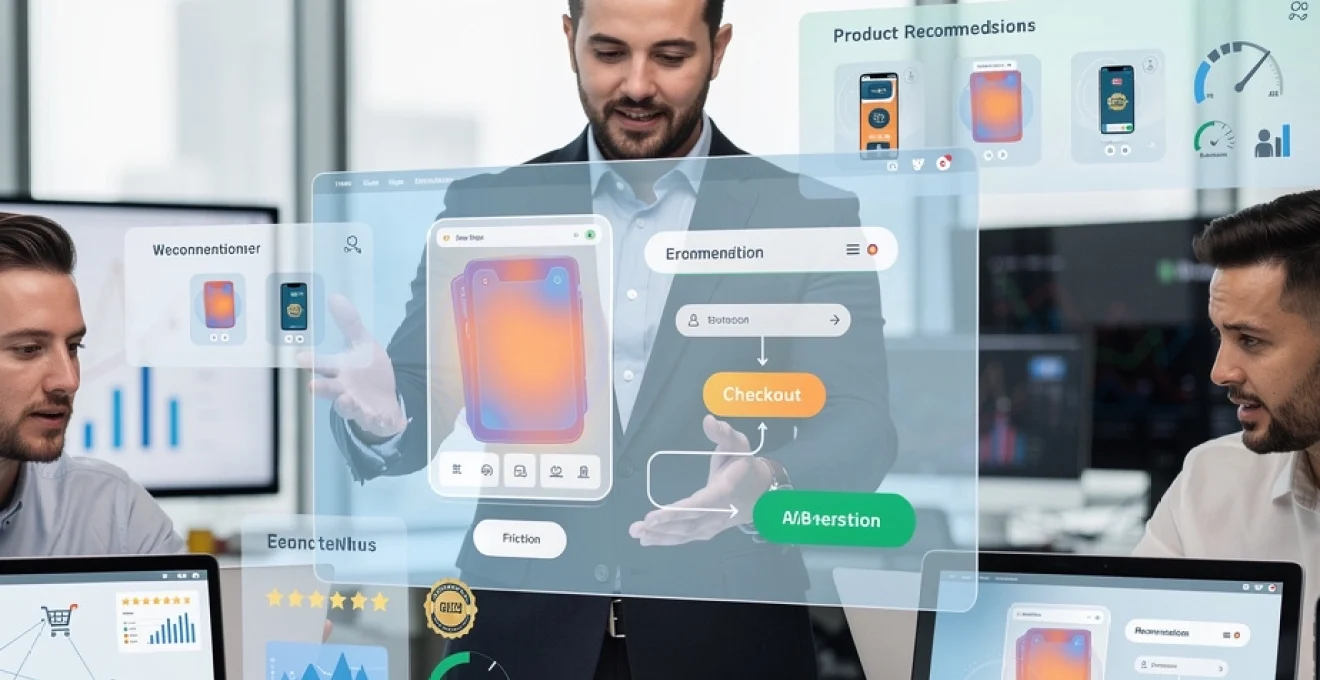
Modern consumers expect seamless, intuitive digital experiences that guide them effortlessly from initial interest to completed purchase. Yet countless businesses struggle with conversion rates that plateau despite significant traffic volumes, often overlooking the subtle friction points that create barriers throughout the customer journey. These obstacles manifest in various forms – from sluggish page load times to confusing navigation structures – each representing missed opportunities for revenue generation.
The challenge extends beyond simple usability issues. Today’s sophisticated shoppers navigate multiple touchpoints before making purchasing decisions, demanding consistency across devices whilst expecting personalised experiences that anticipate their needs. Understanding and eliminating these purchase barriers requires a comprehensive approach that combines technical optimisation with strategic user experience design.
Friction point analysis and user journey mapping for e-commerce optimisation
Effective friction point identification begins with comprehensive user journey mapping that captures every interaction between potential customers and your digital ecosystem. This process involves documenting each touchpoint, from initial awareness through post-purchase follow-up, whilst identifying moments where users hesitate, abandon tasks, or express frustration through their behaviour patterns.
Advanced analytics platforms provide unprecedented insight into user behaviour, revealing patterns that manual observation might miss. Heat mapping technology, session recordings, and funnel analysis combine to create detailed pictures of how customers actually navigate your site, rather than how you assume they do. These tools frequently uncover unexpected friction points, such as users repeatedly clicking non-functional elements or struggling with form validation messages that appear unclear or intimidating.
Heat map analysis using hotjar and crazy egg for conversion bottlenecks
Heat map analysis transforms abstract user behaviour into visual representations that highlight problematic areas within your interface. These tools track mouse movements, clicks, and scroll patterns to identify where users spend excessive time, encounter confusion, or abandon their sessions entirely. The resulting data reveals critical insights about element placement, content hierarchy, and navigation effectiveness that traditional analytics cannot capture.
Successful implementation requires strategic heat map placement across key conversion pages, including product detail pages, category listings, and checkout flows. Focus particularly on above-the-fold content, call-to-action buttons, and form fields where friction commonly occurs. Scroll depth analysis reveals whether important content appears below typical viewing areas, whilst click tracking identifies elements that users expect to be interactive but aren’t functioning as intended.
Abandoned cart recovery through behavioural trigger identification
Cart abandonment rates averaging 70% across industries represent significant revenue recovery opportunities when approached systematically. Behavioural trigger identification involves analysing the specific moments when users disengage, enabling targeted interventions that address their underlying concerns or hesitations.
Effective recovery strategies extend beyond simple email reminders to encompass real-time interventions based on user behaviour. Exit-intent technology can trigger personalised offers or support chat invitations when users show signs of leaving. Progressive disclosure techniques gradually reveal shipping costs and additional fees rather than surprising customers at checkout, whilst guest checkout options eliminate account creation friction for users seeking quick purchases.
Multi-device user experience consistency across touch points
Cross-device consistency ensures that users receive uniform experiences regardless of their chosen platform, maintaining momentum throughout extended consideration periods. This approach recognises that modern purchase journeys frequently span multiple devices, with customers researching on mobile during commutes before completing transactions on desktop computers at home.
Implementation requires synchronised design systems that maintain visual hierarchy, interaction patterns, and information architecture across all platforms. Shopping cart persistence, wishlist synchronisation, and progress saving capabilities prevent users from losing momentum when switching devices. Responsive design frameworks provide the foundation, but true consistency demands attention to context-specific optimisations that acknowledge different usage patterns across device types.
Checkout flow optimisation using baymard institute guidelines
Research from the Baymard Institute reveals that optimised checkout processes can reduce abandonment rates by up to 35% through strategic simplification and trust-building measures. Their extensive analysis of checkout usability identifies common friction points including unexpected costs, complicated registration requirements, and insufficient payment options that consistently drive users away from completed purchases.
Optimal checkout flows minimise the number of steps whilst maximising transparency about costs, delivery timeframes, and return policies. Single-page checkouts work effectively for simple purchases, whilst multi-step processes suit complex transactions requiring extensive
information. In both cases, following Baymard Institute guidelines means removing all non-essential fields, supporting auto-fill, clearly labelling errors, and offering multiple trusted payment methods. When you systematically test these best practices against your existing checkout, you create a checkout experience that feels almost invisible – users simply glide through, instead of feeling like they are working to give you money.
Personalisation engine implementation for dynamic product recommendations
Once friction in the journey is reduced, the next step in improving product experience is to make every interaction feel uniquely relevant. A well-implemented personalisation engine acts like a digital sales assistant, surfacing products and content that match each visitor’s intent, preferences, and context. By tailoring the experience, you not only remove barriers to purchase, you also shorten decision time and increase the perceived value of your catalogue.
Successful personalisation for ecommerce goes beyond generic “customers also bought” widgets. It relies on robust data pipelines, accurate predictive models, and real-time decisioning that can respond to user behaviour within milliseconds. When done correctly, personalised recommendations can drive 10–30% of total revenue, particularly for brands with large assortments and recurring purchase patterns.
Machine learning algorithms for predictive product matching
At the core of dynamic product recommendations are machine learning algorithms designed for predictive product matching. These models analyse behavioural data such as clicks, views, time-on-page, add-to-cart events, and past purchases to infer what a user is likely to want next. Common approaches include collaborative filtering, content-based filtering, and hybrid recommendation systems that combine both methods.
You don’t need to build your own algorithms from scratch to benefit from predictive product matching. Many ecommerce platforms and recommendation engines expose configurable models that you can train on your historical data. The key is to continuously feed these models with fresh interaction signals so they adapt to seasonality, new product launches, and changing consumer tastes. Think of the algorithm like a salesperson who gets better with every conversation – the more quality data you give it, the more accurate and persuasive it becomes.
Real-time behavioural data integration with segment and amplitude
Reliable personalisation depends on real-time behavioural data that flows cleanly between your ecommerce platform, analytics stack, and recommendation engine. Tools such as Segment and Amplitude act as the connective tissue, capturing granular events from websites, mobile apps, and other touchpoints, then standardising and routing them to downstream systems. This unified data foundation allows you to build consistent user profiles that reflect actual behaviour rather than assumptions.
When you integrate real-time behavioural data, you can trigger personalised experiences at the exact moment intent is expressed. For example, if a user views several high-end items without adding them to cart, you might surface a financing option or a comparison guide that addresses perceived cost barriers. By mapping these data-driven interventions across the journey, you transform raw analytics into concrete improvements to the product experience and reduce the likelihood of abandonment.
Dynamic content delivery networks for personalised user interfaces
Delivering personalised interfaces at scale requires more than intelligent recommendations; it also demands infrastructure that can respond quickly in different geographies and device conditions. Dynamic Content Delivery Networks (CDNs) cache and deliver personalised assets close to the user, ensuring that tailored homepages, banners, and product carousels load without delay. This is crucial because slow personalised elements can actually become a new barrier to purchase if they cause layout shifts or visible loading states.
Modern CDNs support edge-side logic, allowing you to perform lightweight personalisation decisions at the edge rather than waiting for the origin server. For instance, you can vary hero content by location, device type, or returning/first-time status before the page even reaches the browser. This approach blends performance optimisation with user relevance, ensuring that the experience feels both fast and bespoke, which directly contributes to higher conversion rates.
A/B testing frameworks for recommendation algorithm performance
No matter how sophisticated your recommendation algorithms appear, their real value is measured by how they influence behaviour in production. Implementing an A/B testing framework allows you to compare different recommendation strategies, layouts, and placements against clear success metrics such as click-through rate, add-to-cart rate, and revenue per visitor. This experimental mindset turns personalisation from a one-off project into an ongoing optimisation engine.
To avoid skewed insights, ensure that tests run long enough to reach statistical significance and that your control group represents your current “best known” experience. You might discover, for example, that personalised bundles outperform single-product suggestions on product pages but perform worse on the checkout step where users prefer fewer distractions. By iterating through structured experiments, you gradually uncover which combinations of algorithm logic and UX design truly remove barriers to purchase for your specific audience.
Trust signal optimisation and social proof integration
Even a perfectly designed and personalised journey will stall if users do not trust your brand, your site security, or your promises. Trust signals and social proof address the classic objections of “will it work?” and “will it work for me?” by showing that real people and credible institutions stand behind your products. In ecommerce, this can be the deciding factor, particularly for first-time buyers who have no prior relationship with your brand.
Effective trust optimisation starts with the fundamentals: visible SSL certificates, clear contact details, transparent returns and refund policies, and recognisable payment logos. From there, you can layer in social proof such as verified reviews, star ratings, customer photos, and testimonials that appear contextually throughout the journey. For example, showcasing review snippets near the “Add to cart” button can ease last-minute hesitation, while logos from independent review sites or industry certifications reassure users that your claims are legitimate.
It is also important to present trust signals in a way that feels authentic rather than promotional. Highlight a mix of positive and constructive reviews to demonstrate transparency and respond publicly to issues where appropriate. When customers see that you acknowledge and resolve problems, they are more likely to believe your promises about delivery, product quality, and after-sales support. Over time, this transparency reduces perceived risk and encourages repeat purchases, which is the ultimate validation that your product experience is working.
Page load speed enhancement and core web vitals improvement
Speed remains one of the most powerful levers for improving product experience and removing barriers to purchase. Google’s research has shown that as page load time increases from one to five seconds, the probability of bounce rises by up to 90%. When essential ecommerce pages, such as product listings and checkout, load slowly, users quickly lose patience and trust, especially on mobile connections where latency is more noticeable.
Focusing on Core Web Vitals – Largest Contentful Paint (LCP), First Input Delay (FID), and Cumulative Layout Shift (CLS) – gives you a practical framework for measuring and improving performance. Optimising images, minifying CSS and JavaScript, enabling HTTP/2, and leveraging browser caching are all well-known techniques, but their impact is magnified when directly tied to these user-centric metrics. For example, prioritising above-the-fold product imagery and deferring non-essential scripts can dramatically improve LCP on category and product detail pages.
From a user’s perspective, a fast site feels more reliable and professional, which in itself builds trust and reduces friction. When people can quickly move from search results to product pages, adjust filters without delay, and complete payment in seconds, they are far less likely to reconsider their purchase. Treat performance optimisation as an ongoing discipline rather than a one-time project, regularly auditing your store using tools like PageSpeed Insights and Lighthouse to ensure that new features do not inadvertently slow down the experience.
Mobile-first design implementation and progressive web app integration
With mobile devices accounting for more than half of global web traffic and a growing share of ecommerce revenue, a mobile-first approach is no longer optional. Mobile users expect responsive layouts, touch-friendly interactions, and ultra-fast load times, all integrated into a coherent product experience that mirrors the ease of native apps. Progressive Web Apps (PWAs) bridge the gap by providing app-like capabilities – such as offline support and home screen installation – through standard web technologies.
Designing mobile-first means starting with the constraints of smaller screens and touch interfaces, then scaling up to tablets and desktop. This encourages you to prioritise the most critical elements: clear product imagery, concise copy, prominent calls-to-action, and streamlined navigation. When combined with a PWA architecture, you can pre-cache assets, enable push notifications, and support near-instant page transitions, dramatically reducing friction for repeat visitors who access your store frequently from their phones.
Accelerated mobile pages (AMP) configuration for product pages
Accelerated Mobile Pages (AMP) can further enhance mobile product experience, particularly for traffic originating from search and paid campaigns. AMP pages are stripped-down versions of your site that follow strict performance guidelines, resulting in lightning-fast load times on compatible platforms. For ecommerce, configuring AMP for product listing and product detail pages can significantly reduce bounce rates and increase engagement among mobile users who are still in the research phase.
However, AMP implementation should be handled carefully to avoid fragmenting your analytics and user journey. Ensure that tracking parameters, canonical tags, and internal links correctly connect AMP views with your main site and checkout flow. Think of AMP as a high-speed entry ramp: its purpose is to get users into your ecosystem quickly and smoothly, after which your main PWA-backed experience can take over to handle browsing, comparison, and purchase.
Touch interface optimisation for gesture-based navigation
Mobile product experience must respect how people physically interact with their devices. Thumb reach, tap targets, and gestures all influence whether a user feels in control or constantly mis-tapping and zooming. Buttons, filters, and interactive elements should be large enough for comfortable tapping, spaced sufficiently apart to prevent accidental clicks, and positioned within easy reach of the average thumb on common screen sizes.
Gesture-based navigation, such as swipeable product image galleries or horizontal carousels for related items, can make exploration feel natural and enjoyable when executed well. The key is to provide clear visual affordances – subtle arrows, pagination dots, or hint animations – so users immediately understand what is possible. When navigation feels intuitive, users spend more time discovering products and less time wrestling with the interface, which directly contributes to higher conversion and fewer abandoned sessions.
Mobile payment gateway integration with apple pay and google pay
Payment friction is one of the final and most critical barriers to purchase, especially on mobile where typing card details and billing addresses can be tedious. Integrating mobile wallets such as Apple Pay and Google Pay allows users to complete transactions with a single tap, using securely stored credentials and device-level authentication like Face ID or fingerprint recognition. This not only speeds up checkout but also increases perceived security because sensitive data never passes through your servers.
From a product experience standpoint, offering these payment options signals that you respect your customers’ time and security concerns. Display the mobile wallet buttons prominently in the checkout flow and ensure that the process is clearly explained the first time a user encounters it. As you monitor adoption rates, you will often see substantial improvements in mobile conversion, particularly for repeat buyers who appreciate the convenience of one-tap purchases.
Responsive image delivery using WebP format and lazy loading
High-quality visuals are essential for ecommerce, yet unoptimised images are one of the biggest contributors to slow page loads on mobile. Responsive image delivery using modern formats like WebP and techniques such as lazy loading helps balance visual richness with performance. By serving appropriately sized images based on device resolution and network conditions, you avoid wasting bandwidth on over-sized assets that provide no additional value.
Lazy loading defers the loading of images that are not immediately visible, such as those further down a product listing page. As users scroll, these images load progressively, giving the perception of a fast and responsive interface. When combined with WebP’s superior compression, this approach can dramatically reduce page weight, improving Core Web Vitals and making the buying journey smoother on slower connections without sacrificing the quality of your product presentation.
Conversion rate optimisation through advanced analytics and attribution modelling
Improving product experience to remove barriers to purchase ultimately comes down to understanding what truly drives conversions and where users fall out of the funnel. Advanced analytics and attribution modelling give you a more accurate picture of how different channels, touchpoints, and on-site interactions contribute to a sale. Rather than relying on last-click attribution, which often overvalues direct and branded traffic, multi-touch models reveal the importance of early-stage content, email nurturing, and remarketing in shaping purchase decisions.
To make this actionable, you can build dashboards that combine behaviour metrics (like funnel completion, scroll depth, and engagement with product recommendations) with commercial outcomes (revenue, average order value, and lifetime value). When you overlay this with cohort analysis, you start to see how improvements in specific parts of the product experience – such as faster load times or more relevant recommendations – affect different customer segments over time. This evidence-based approach ensures that optimisation efforts focus on changes that materially reduce friction and generate incremental revenue.
Attribution modelling also helps you identify underperforming or misleading touchpoints that may be creating hidden barriers. For example, you might find that a particular ad group drives a lot of traffic but very few assisted conversions, suggesting a mismatch between promise and on-site experience. By aligning acquisition messaging, onsite UX, and post-purchase communication, you create a more coherent and trustworthy journey. The result is a product experience that not only feels better for users but is also measurably more efficient at turning interest into repeat purchases.