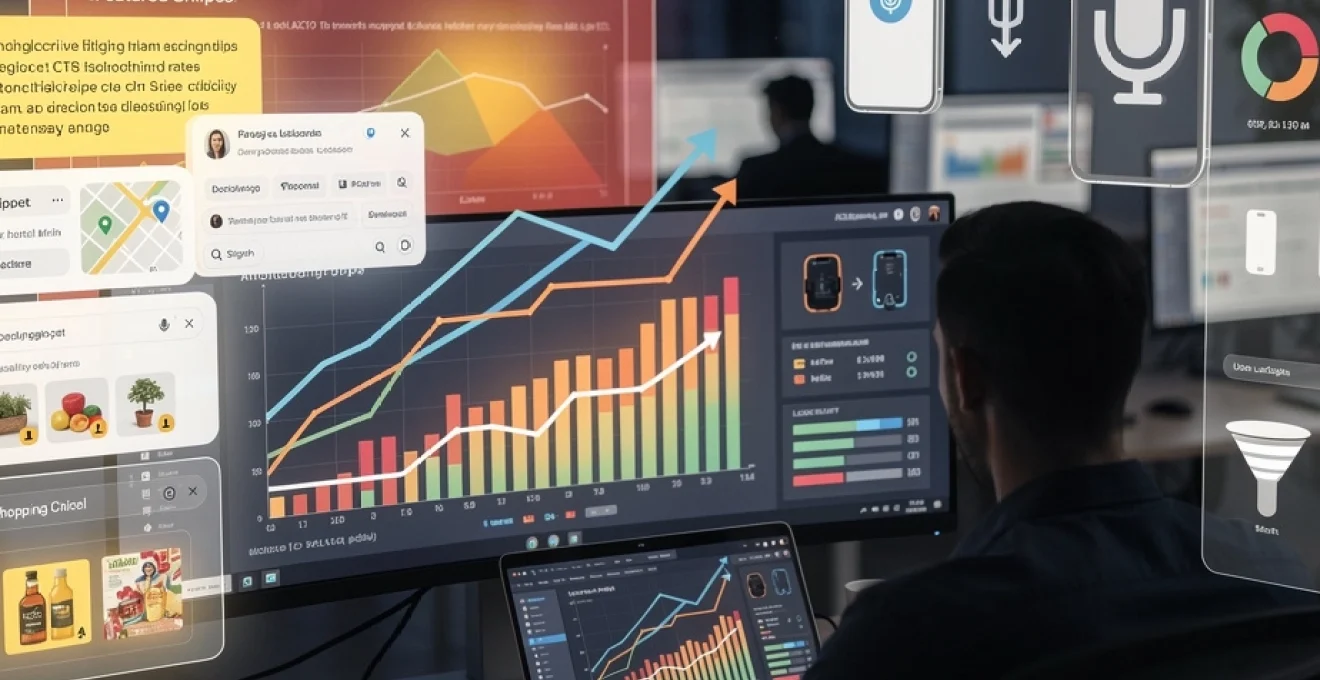
The digital marketing landscape has witnessed a significant transformation in recent years, with click-through rates across various platforms experiencing notable declines. This shift reflects profound changes in user behavior patterns, search engine algorithm developments, and the evolving nature of how people interact with digital content. Understanding these declining CTR trends provides crucial insights into modern consumer preferences, technological adaptations, and the shifting dynamics of online engagement.
The implications of declining click-through rates extend far beyond simple metrics, revealing complex user behavior patterns that influence everything from search engine optimization strategies to paid advertising effectiveness. As users become increasingly sophisticated in their digital interactions, they demonstrate more selective engagement patterns, often finding the information they need without necessarily clicking through to destination pages.
CTR degradation patterns across google SERP features and algorithm updates
Google’s search engine results pages have undergone dramatic transformations over the past decade, with each algorithmic update and new feature implementation directly impacting traditional click-through rate patterns. The introduction of enhanced SERP features has fundamentally altered how users interact with search results, often providing immediate answers without requiring clicks to external websites.
Search behavior analytics reveal that users increasingly rely on information displayed directly within search results, reducing the necessity for traditional website visits. This shift represents a fundamental change in information consumption patterns, where immediate gratification takes precedence over deeper exploration. The evolution of SERP features demonstrates Google’s commitment to providing comprehensive answers within their ecosystem, effectively reducing traffic distribution to external sources.
Featured snippets impact on organic position click distribution
Featured snippets have revolutionized how search traffic distributes among organic results, with position zero capturing significant portions of user attention and clicks. Research indicates that featured snippets can reduce clicks to the first organic position by up to 8%, fundamentally altering traditional SEO strategies and content optimization approaches.
The psychology behind featured snippet engagement reveals users’ preference for quick, authoritative answers displayed prominently within search results. This behavior pattern suggests that modern searchers prioritize efficiency over comprehensive exploration, often finding sufficient information within the snippet itself without requiring additional clicks.
Knowledge panel integration effects on brand search CTR metrics
Knowledge panels have significantly impacted brand-related search queries, often providing comprehensive business information directly within search results. This integration affects traditional brand website click-through rates, as users can access contact information, business hours, reviews, and basic company details without visiting the official website.
The data shows that knowledge panels particularly impact local businesses and well-established brands, where users frequently seek basic information rather than detailed exploration. This shift in user behavior emphasizes the importance of optimizing knowledge panel information and maintaining accurate business profiles across Google’s ecosystem.
Local pack expansion influence on traditional organic results performance
The expansion of local pack results has fundamentally altered click distribution patterns for location-based queries, often capturing substantial traffic that would traditionally flow to organic results. Local pack features typically appear above traditional organic results, commanding prime real estate and user attention for geographically relevant searches.
This positioning advantage has created significant challenges for businesses without strong local SEO optimization, as users increasingly interact with map-based results and local business listings. The visual prominence of local packs, combined with integrated review systems and direct contact options, creates compelling user experiences that often eliminate the need for additional website visits.
Shopping carousel implementation and e-commerce query behaviour shifts
Google Shopping carousels have transformed e-commerce search behavior by providing immediate product comparison opportunities directly within search results. These visual product displays capture significant user attention and clicks, often redirecting traffic that would traditionally flow to organic e-commerce results.
The implementation of shopping carousels demonstrates how visual search elements can dramatically impact traditional click-through patterns. Users increasingly expect immediate product information, pricing comparisons, and visual confirmation before proceeding to individual retailer websites, fundamentally changing the e-commerce customer journey.
Mobile-first indexing correlation with Cross-Device user engagement metrics
Google’s transition to mobile-first indexing has coincided with significant changes in user engagement patterns across different devices, reflecting the evolving nature of digital consumption habits. Mobile users demonstrate distinct behavior patterns compared to desktop users, often exhibiting shorter attention spans, different click preferences, and unique interaction styles that directly impact overall CTR metrics.</p
This shift toward mobile-first indexing means that signals from your smartphone experience now largely define how Google evaluates your site’s relevance and usability. When users behave differently on mobile compared with desktop—scrolling faster, scanning more, and abandoning pages more quickly—those patterns show up in your click-through rates and broader engagement metrics. By examining CTR degradation through a cross-device lens, we can start to see how expectations for speed, clarity, and intent-matching content are reshaping what earns a click in the first place.
Smartphone query intent evolution and micro-moment interaction patterns
Smartphone search behavior is increasingly dominated by what Google calls micro-moments—those brief, intent-rich moments when users turn to their device to know, go, do, or buy something. These micro-moment searches are often shorter, more context-driven, and more urgent than desktop queries, which directly influences mobile click-through rates. Users expect the first visible results to satisfy their intent within seconds, and if the SERP itself answers the question, a click may never happen.
We see this most clearly with local intent (“near me” queries), navigational searches for brands, and quick fact-finding. As intent becomes more explicit—“open now near me,” “best running shoes under $100,” “refund policy + brand”—Google is able to surface richer SERP features that compress the decision process. For marketers, declining CTR on mobile isn’t necessarily a sign of reduced interest; instead, it often reflects that users are resolving their needs higher up the funnel, sometimes without leaving the SERP at all.
To adapt, you need to design content and snippets that align with these micro-moments rather than fight them. That means writing title tags and meta descriptions that speak directly to specific use cases (“same-day delivery,” “book online in 60 seconds,” “free size exchanges”) and structuring content so key answers surface in search previews. When you optimize for micro-moment intent, you’re not just chasing clicks—you’re positioning your brand as the obvious choice when users are most ready to act.
Voice search integration through google assistant and alexa query processing
Voice search via Google Assistant, Alexa, and Siri introduces another subtle but important shift in click-through behavior. Spoken queries tend to be longer and more conversational (“What’s the best way to fix a slow laptop?” rather than “fix slow laptop”), which pushes search engines toward direct, single-answer responses. When a voice assistant reads out one result—often drawn from a featured snippet—there is no traditional SERP, and thus no traditional CTR distribution across multiple blue links.
From a user behavior perspective, this concentrates attention and trust on the answer that is surfaced, while making clicks the exception rather than the norm. Many voice interactions are informational and zero-click by design: the user gets what they need without ever seeing a web page. For transactional or complex needs, however, users often transition from a voice query to a visual device, like opening results on their phone or laptop to complete a purchase or form.
For brands, the implication is that optimizing for voice search isn’t just about ranking; it’s about becoming the answer. Structured data, FAQ content, and natural-language phrasing increase your chances of being selected as the spoken response. While you may see fewer clicks for certain informational queries, those that do convert from voice to screen tend to be higher-intent, because the voice assistant has already pre-qualified you as a trusted option.
Progressive web app performance metrics versus native app usage statistics
The rise of Progressive Web Apps (PWAs) adds another layer to how we interpret declining click-through rates. PWAs blur the line between websites and native apps, enabling app-like experiences directly in the browser with fast load times, offline access, and push notifications. When users can install a PWA to their home screen and return directly to it, some repeat engagement shifts away from search and traditional CTR metrics altogether.
Native apps historically captured this behavior, but they required an extra friction step via app stores. PWAs reduce that friction, which can lower search-based CTR for returning users while simultaneously increasing overall engagement, session depth, and lifetime value. In analytics, this can look like weaker acquisition metrics but stronger retention and revenue numbers, especially on mobile.
If you’re comparing PWA performance to native app usage, you’ll often find that PWAs win on first-touch discoverability (because they are indexable web experiences) but lose some of the closed-ecosystem engagement metrics that native apps enjoy. The key is to read CTR as an acquisition metric and weigh it against downstream behaviors: how frequently users return, how many screens they view, and how efficiently they complete tasks once they’ve landed.
AMP implementation effects on page load speed and user retention rates
Accelerated Mobile Pages (AMP) were introduced to tackle one of the biggest drivers of CTR degradation on mobile: slow, clunky pages that users abandon before they even finish loading. AMP-optimized content often appears in specialized carousels and can benefit from lightning-fast load times, which in turn reduce bounce rates and improve user retention. When users trust that a click will result in an instant, stable page, their willingness to engage increases.
However, AMP can also change how clicks are counted and where they land. Because AMP pages are sometimes served from Google’s cache, analytics setups must be carefully configured to avoid underreporting or mislabeling traffic. At the same time, the presence of AMP badges and visually distinct formats on SERPs can siphon clicks away from slower, non-AMP competitors, further widening the performance gap between fast and slow sites.
From a behavioral standpoint, AMP reinforces the broader trend: users reward speed and penalize friction. Even if your AMP implementation doesn’t generate a dramatic spike in CTR, it often stabilizes engagement by reducing pogo-sticking and early exits. When you evaluate your own declining CTR numbers, ask whether slow performance is causing users to hesitate before clicking—or to abandon your pages so quickly that the clicks you do earn fail to translate into meaningful sessions.
Search query sophistication and long-tail keyword behaviour analytics
As users become more experienced searchers, their queries grow more sophisticated, longer, and more precise. This evolution toward long-tail keyword behavior has a direct impact on click-through rates, sometimes lowering overall CTR while increasing the quality and intent of the clicks that remain. Instead of broad, ambiguous terms like “laptops,” searchers might use focused phrases such as “best lightweight laptop for video editing under 1000,” revealing far more about what they actually want.
For SEO strategies, this creates a paradox: the more specific and segmented your keyword targeting becomes, the smaller the impression pool, and the more volatile CTR can appear. A single change in SERP layout or a new competitor can swing CTR noticeably on low-volume long-tail terms. Yet, those same terms often yield higher conversion rates because users arrive with a clear problem and a narrower set of acceptable solutions.
To capitalize on this, map your content strategy around clusters of related long-tail queries, not isolated keywords. Use question-based headings, comparison pages, and detailed guides that match the way real users phrase their problems. When you see CTR declining on generic head terms but increasing on more detailed queries, it’s often a signal that your audience is self-segmenting and moving deeper into the funnel before they ever click—an opportunity to meet them with more targeted, high-intent experiences.
Ad blocker adoption impact on paid search visibility and organic CTR compensation
The widespread adoption of ad blockers and privacy-focused browsers has reshaped the balance between paid and organic visibility. When users block display ads or limit tracking, paid impressions may drop or become underreported, and some sponsored placements can disappear entirely from the user’s field of view. On the surface, this can look like declining CTR for paid campaigns, but the reality is often that a portion of your audience never sees the ad in the first place.
From a user behavior perspective, ad blocker adoption is a clear statement of intent: these users are signaling a strong preference for uncluttered, content-first experiences. As a result, some of the attention that would have gone to paid placements may shift back toward organic listings, featured snippets, and other non-intrusive SERP features. In some markets, brands have observed a modest “organic CTR compensation” effect, where organic click-through slightly increases as paid visibility declines for ad-blocking users.
For marketers, this environment demands a more integrated approach. Relying solely on paid search while neglecting organic optimization becomes riskier as more users opt out of ad ecosystems. Investing in high-quality content, schema markup, and technically sound SEO not only protects your discoverability but also aligns your experience with user expectations for relevance and respect for privacy. When CTR falls on the paid side, a strong organic presence can act as a safety net, capturing intent that might otherwise be lost.
Core web vitals compliance and user experience signal correlation analysis
Google’s Core Web Vitals—Largest Contentful Paint (LCP), First Input Delay (FID), and Cumulative Layout Shift (CLS)—formalize what users have been telling us through their behavior for years: speed, stability, and responsiveness shape whether they feel confident enough to click and stay. As these metrics have become explicit ranking signals, they also serve as a useful lens for interpreting CTR trends. Sites that struggle with Core Web Vitals often see a subtle but persistent erosion of both rankings and click-through rates over time.
Think of Core Web Vitals as the structural integrity of a building. Even if the facade (your titles and descriptions) looks appealing, users will avoid going inside if the doors stick, the floors shake, or the lights flicker. When Google detects poor vitals, it’s essentially noticing that people don’t enjoy being in your building, and over time, it features it less prominently. The result is fewer impressions in high-value positions and, consequently, declining CTR—even before users have a chance to evaluate your content.
Cumulative layout shift penalties on user session duration metrics
Cumulative Layout Shift measures how much content moves around as the page loads, and it directly influences how trustworthy and usable a page feels. We’ve all experienced tapping what looked like a “Read more” button, only to be hijacked by a suddenly appearing ad—a textbook example of CLS gone wrong. This kind of visual instability doesn’t just hurt user satisfaction; it also shortens session duration and increases frustration-driven bounces.
When users notice that a site frequently shifts content, they quickly learn to avoid it, which can feed back into lower CTR as brand perception declines. Over time, Google’s algorithms may interpret weak engagement and high bounce rates as signs that the result is a poor match for user intent, leading to lower average positions and fewer high-visibility impressions. The compounding effect is a steady degradation in click-through rate that originates not from weak titles or irrelevant content, but from an unstable visual experience.
To mitigate CLS-related penalties, prioritize reserving space for images, ads, and dynamic elements so they don’t suddenly appear and shove other content around. Treat layout stability as part of your brand promise: when users know that your pages won’t jump or misfire, they’re more likely to click your results with confidence and stay long enough to engage meaningfully.
First input delay optimisation effects on e-commerce conversion funnels
First Input Delay captures how quickly a page responds when a user first tries to interact—tapping a button, opening a menu, or adding an item to the cart. In e-commerce, this moment is critical: any lag between intent and response erodes trust and increases the risk that a user will abandon the process. Even if your CTR remains stable, poor FID can silently choke your conversion funnel by creating friction at the exact point where users are trying to move forward.
From a behavioral standpoint, users interpret slow responsiveness as a sign that a site is either broken or insecure, especially during payment or login steps. This perception doesn’t just lower conversion rates; it can feed back into search behavior as frustrated customers search again for competitors, click alternative listings, and eventually train themselves to bypass your brand altogether. Declining branded CTR can thus be an indirect symptom of unresolved FID issues in your checkout or account flows.
Improving FID often requires technical work—reducing heavy JavaScript, deferring non-essential scripts, and optimizing third-party tags—but the payoff is both immediate and compounding. When interactions feel instant, users move smoothly from product discovery to payment confirmation. Over time, this frictionless experience encourages repeat visits and positive word of mouth, which can boost branded search volume and, ultimately, restore or elevate CTR across your key e-commerce queries.
Largest contentful paint performance across industry vertical benchmarks
Largest Contentful Paint measures how long it takes for the main content of a page to become visible. It’s one of the clearest technical proxies we have for a basic user question: “How fast can I see what I came here for?” Research from multiple industry studies suggests that when LCP exceeds about 2.5 seconds, abandonment rates rise sharply, especially on mobile connections. Users simply don’t wait around to see if a slow page will eventually load; they return to the SERP and click something else.
Different industries face different LCP challenges—media sites with heavy imagery and ads, SaaS platforms with complex dashboards, retailers with large product photos—but the behavioral pattern is consistent. As your LCP time slips behind competitors, you may see CTR decline even when your ranking holds steady. Users remember which sites feel sluggish and may start skipping them preemptively, much like choosing a shorter queue at a supermarket because previous experiences with a particular cashier were slow.
Benchmarking your LCP against industry standards gives you a realistic target rather than an abstract score. If most of your competitors deliver main content in under two seconds and you’re averaging four, the odds are high that declining click-through rates are at least partly performance-driven. Investing in image optimization, efficient hosting, and modern front-end frameworks isn’t just a technical exercise—it’s a direct response to what user behavior is telling you: speed, stability, and responsiveness are now as central to earning the click as relevance and persuasion.